
Automobile retail sales in India rose 11 per cent in September as better supplies from manufacturers enabled dealers to ramp up customer deliveries amid the ongoing festive period, Federation Of Automobile Dealers Associations said on Tuesday. Last month, total retail sales stood at 14,64,001 units as compared to 13,19,647 units in September 2021. FADA noted that October is expected to witness even better overall sales due to the festive season further gathering steam.

The Street's optimism on India's largest listed automotive maker by market capitalisation is not misplaced, given the robust wholesale performance in recent months and the strong 2023-24 (FY24) October-December (Q3) results.

Automobile retail sales increased 9 per cent year-on-year in June quarter FY25 with all segments, barring tractors, reporting growth, dealers' body FADA said on Monday. Overall retail sales rose to 61,91,225 units in the April-June period from 56,59,060 units in the same quarter of FY24. Passenger vehicle retails increased 2.53 per cent to 920,047 units as against 897,361 units a year ago.
Automobile retail sales in India rose 14 per cent in January on the back of robust registrations across passenger vehicles, two-wheelers and tractors, dealers' body Federation of Automobile Dealers Associations said on Monday. Total sales across categories last month rose to 18,26,669 units, as compared to 16,08,505 units in January 2022. Passenger vehicle registrations rose to 340,220 units last month, an increase of 22 per cent as compared to 279,050 units in the year-ago period.

Banks and NBFCs are launching festival offers, including lower loan rates, cashback, EMI schemes and GST-linked benefits to tap rising demand ahead of Diwali

The auto industry has had a mixed month. The build up to Dhanteras and Diwali was good but the demand tapered off subsequently.

The five-year (2015-16 to 2020-21, or FY21) compound annual growth rate (CAGR) of the overall auto industry is now negative at 2 per cent, against 5.7-per cent growth it saw in the previous five years (from 2010-11 to 2015-16).

Domestic car sales were down 35.95 per cent at 1,22,956 units as against 1,91,979 units in July 2018, according to data released by the Society of Indian Automobile Manufacturers (SIAM) on Tuesday.

Retail sales of vehicles across categories in India grew by 11.21 per cent at 32,08,719 units in November, as compared to 28,85,317 units in the same month last year riding on two-wheeler demand, Federation of Automobile Dealers Associations said in Monday. Retail sales of two-wheelers were at 26,15,953 units last month, as compared to 22,58,970 units in November 2023, a growth of 15.8 per cent buoyed by the festive spillover.

Automakers Maruti Suzuki, Tata Motors, Mahindra & Mahindra and Kia reported robust growth in their vehicle dispatches in the domestic market for August buoyed by festive demand and easing of semiconductor shortage woes. Other manufacturers like Hyundai, Toyota and Skoda also reported growth in wholesales in August as compared with the same month last year. The country's largest automaker Maruti Suzuki India said its domestic passenger vehicle dispatches increased by 30 per cent to 134,166 units in August as compared with 103,187 units in the year-ago month.

Weak monsoon rains could have a negative impact on India's automobile sector which is seeing early signs of improvement with the sale of passenger cars and utility vehicles rising in May.

For hatchbacks and sedans, offers range between Rs 40,000 and Rs 80,000 while SUVs and multi-purpose vehicles carry benefits exceeding Rs 1 lakh.

Passenger vehicle wholesales in India declined 2.5 per cent year-on-year to 341,510 units in July, impacted by high base effect as well as companies reducing vehicle dispatches to dealers amid moderation in demand. The overall passenger vehicle (PV) dispatches from companies to dealers stood at 350,355 units in July 2023, automobile industry body Siam said on Wednesday.

Electric vehicle (EV) sales in India topped the 1 million mark in less than nine months in 2023, a milestone that took an entire year in 2022. According to data from the Ministry of Road Transport and Highways' Vahan Dashboard, 1,037,011 EVs were registered with regional transport offices till September 19, accounting for 6.4 per cent of the total automobile sales in the country this year. The sales surge can be attributed to increased individual purchases as well as business-to-business (B2B) acquisitions by EV fleet operators, industry sources said.

A robust show during the March quarter of 2024-25 (Q4FY25) and hopes of a strong demand momentum have led to an upward revision of Mahindra & Mahindra's (M&M's) earnings. With a slew of launches lined up amid a steady demand environment, brokerages see M&M outperforming peers in passenger vehicles (PVs), tractors and commercial vehicles (CVs).

Retail sales of automobiles in the domestic market saw a 7.73 per cent year-on-year decline in October this year at 21,17,596 units, mainly due to dip in two-wheeler uptake with the inauspicious period of Shraddh affecting new purchases, the Federation of Automobile Dealers Associations (FADA) said on Monday. Retail sales of automobiles in the domestic market stood at 22,95,099 units in October 2022, FADA said in a statement. Two-wheeler retail sales were at 15,07,756 units last month, as against 17,25,043 units in the year-ago period, down 12.60 per cent, as per the latest data by FADA.

Why is Shailesh Chandra, managing director of Tata Motors Passenger Vehicles and Tata Passenger Electric Mobility, not worried about the competition?

Tata Motors on Wednesday reported a 22 per cent fall in consolidated net profit to Rs 5,578 crore for the third quarter ended December 2024, impacted by s decline in revenue from its passenger and commercial vehicles divisions. The company had posted a consolidated net profit of Rs 7,145 crore in the same quarter last fiscal, Tata Motors said in a regulatory filing.

Maruti Suzuki India on Thursday said the locally manufactured Jimny five-door model has made its debut in the Japanese market. The SUV, which is exclusively manufactured at Maruti Suzuki's Gurugram-based plant, was unveiled in Japan on Thursday.

The country saw a massive year-on-year surge in the demand for electric vehicles, with retail sales of electric two-wheelers rising by 58 per cent, passenger vehicles by 130 per cent, three-wheelers by 82 per cent, and commercial vehicles by 171 per cent in March 2023, according to the data shared by the Federation of Automobile Dealers Associations (Fada). According to a report by JMK Research, the EV segment as a whole grew by 157 per cent during FY23, to 1,180,597 units, from 458,746 units a year ago. Overall, EV sales in March 2023 rose by 82 per cent from the March 2022 figure, the JMK report added.

Sales of luxury brands from Jaguar Land Rover were at 30,094 units during May, up 35 per cent from the same month last year, Tata Motors said in a statement.

A strong demand for diesel SUVs has bumped up the contribution of these variants to Hyundai Motor India's sales to a three-year high, a company top official told Business Standard. The local arm of the South Korean carmaker has benefitted after some leading manufacturers - including car market leader Maruti Suzuki - pulled the plug on diesel models amid tightening regulations. Hyundai has also gained from the changing travel preference -people are frequenting getaways and taking to the road a lot more than what they did before the pandemic. This trend has been fuelling overall SUV sales.

Reflecting the mood, passenger vehicle sales in November either remained muted or skidded for most manufacturers as high fuel prices and the higher cost of borrowing dampened buying sentiment.
Multiple tailwinds for the automobile sector, including a cut in goods and services tax (GST) rates, are keeping analysts bullish on auto stocks from a long-term perspective, even as they see the rally running its course in the near term.

Overall, volume growth is likely to be in the range of 3-8 per cent for two-wheelers and 5-7 per cent for passenger vehicles owing to healthy demand from urban and rural areas and pending order books.
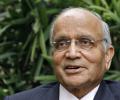
Maruti Suzuki chairman RC Bhargava has said that reducing carbon emissions does not require making a choice between hybrid and electric cars, and that both can play key and complementary roles if the government wants to achieve its aggressive emissions target. Responding to the fact that the sales numbers of hybrid cars have been higher than electric cars in the last quarter of 2024, Bhargava pointed out: "It has never been about electric versus hybrid. "Both have a clear role to play. By 2030 we expect electric car penetration to be around 20 per cent.
Automobile (auto) retail sales in India grew by an impressive 14 per cent in July compared to the same period last year, driven by a surge in the rural economy, good product availability, and product launches. While passenger vehicles (PVs) saw a 10 per cent increase during this period, inventory levels have surged to a historic high of 67-72 days in PVs, equating to Rs 73,000 crore worth of stock, according to the Federation of Automobile Dealers Associations (Fada). This poses a risk to dealer sustainability. Inventory levels in July 2023 were only 50-55 days, equating to a stock worth Rs 49,833 crore. In June 2024, inventory was between 62 and 67 days, with a stock value of Rs 60,000 crore.

Passenger vehicle wholesales in India slipped to a 10-year low in the April-December this fiscal, and the industry will have to work hard to regain better volumes and business health, industry body SIAM said on Thursday.

Tata Motors on Monday said its global sales increased by 36 per cent in July to 90,646 units on robust demand for both commercial and passenger vehicles.

Passenger vehicle sales continue to drop in June; Maruti, Hyundai, Tata Motors, Toyota witness decline. Mahindra & Mahindra, however, reported a 4 per cent growth.
Leading carmakers Maruti Suzuki and Hyundai witnessed a double-digit drop in sales in October on account of the global semiconductor shortage impacting production. Kia India, Honda Cars and MG Motor also saw a fall in dispatches last month as compared with October 2020. However, companies like Tata Motors, Mahindra, Nissan and Skoda managed to post positive numbers last month despite the supply chain challenges.

Auto sales in April have started showing the impact of lockdowns that has put the brakes on the recovery of the sector, a report said on Tuesday. With more states announcing lockdowns and some more OEMs expecting to go for maintenance shutdowns, as many as 50 per cent of the dealers are likely to be impacted by the move, it added. However, the full-year prospects remain positive if the COVID wave recedes in the April quarter and the vaccination drive goes as planned, brokerage firm Centrum said in the report.
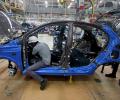
Automobile industry in India is going through a long-term structural slowdown as the compound annual growth rate (CAGR) across all major vehicle segments has witnessed a decline over the last three decades, as per industry body SIAM. The auto industry has been facing headwinds even before the COVID-19 pandemic derailed the entire sector last year, a research conducted by the Society of Indian Automobile Manufacturers (SIAM) has revealed. The study clearly shows that the pandemic is not the only reason for the auto sector slowdown, which is facing deeper structural issues that need attention, the industry body noted.

China's covid crisis could provoke a raw material crunch for India's EV industry later this year.

This is the first decline since June this year when car sales declined by 11%.

From attractive EMIs to assured buyback guarantees, luxury carmakers have lined up a slew of offers to woo customers this festival season to address dwindling sales amid rising inventories.

Bucking a trend of two consecutive months of drop in sales, passenger cars sales in the domestic market witnessed a 14.8 per cent jump in August 2005 at 72,165 units against 62,845 units in August last year.

While Maruti held the top spot for four decades, the Ambassador was the best-selling car in post-Independence India for three decades.
BS-VI emission norms and the COVID-19 lockdown impacted the dispatches.
Demand for passenger vehicles, which has been on a downhill so far this year, will continue to remain sluggish through the first half of 2014 due to high interest rates which has weakened consumer sentiment, says a Fitch Ratings report.
